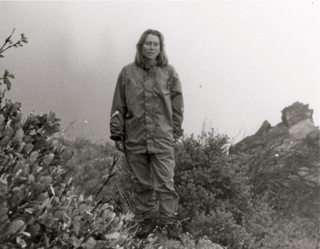
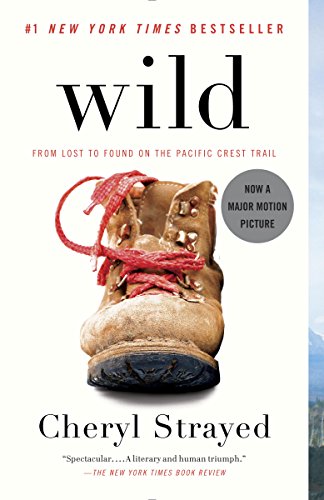
Wild: From Lost to Found on the Pacific Crest Trail is a story about self-discovery and all the challenges one might have to overcome in life. The author, Cheryl Strayed, talks about her life story and her personal trials and triumphs on the Pacific Crest Trail while trying to find out who she really is.
So far in the compelling novel, the reader figures out Cheryl’s life story. The real reason she is on the almost hundred day hike. The reader learns of the passing of her beloved mother, which leads to a serious downfall in her life. Strayed then lost her family, friends and husband. She turned to a life of adultery and drugs, leaving her in the worst conditions she had ever been in “I’d Think: This is not me. This is not the way I am. Stop it. No more. But in the Afternoon … I’d think: Yes. I get to do this. I get to waste my life. I get to be a junk.“(Strayed 53). The story gracefully incorporates her past leading up to the hike and the hike itself, both showing the struggles she is going through.
Interestingly, the novel doesn’t really give any clues to where the story will lead because it is purely Strayed’s story. The book has had a serious tone all the way through the first third of the novel. This leads to the assumption that in the end there will be a relief of that stress, and that the heavy-hearted topics will come to a fulfilling ending, where Strayed finds her true self.

Each character and event in the novel has been experienced by Strayed and this leads to authenticity in the story. In the author’s note at the beginning Strayed states “To write this book, I relied upon my personal journals, researched facts when I could … and called upon my own memory of these events and this time of my life” (Strayed xi) All the characters are relevant and provide meaning and a purpose to Cheryl and the plot.
The story resonated with me because it deals with the loss of a loved one, and explores how that affects your life and your relationships with others. Wild will resonate with anyone who has been through a loss. Through the first 100 pages Cheryl is coping with the loss of her mother, and realizing that her life was nothing without her mother. Her mother kept her family together, gave Cheryl hope, and inspired her to pursue her dreams even when she was dying. The reader is swept away with the pain that Cheryl went through when she lost her mother. “I howled and howled and howled, rooting my face into her body like an animal” (Strayed 26). This demonstrates the pain she went through and explains why overcoming this loss is the driving point for the novel.

During the parts of the first 100 pages of her on the trails, I was able to see how she truly was beginning to cope with the loss. During the time not on the trails you see Cheryl fearing what she is without her mother, husband and family and how she resorts to drugs and unhealthy relationships. While on the hike she tunes into herself and begins to fear the real world around her. Her survival is at stake and I think this makes her realize she is more than the people in her life, and that she can only really rely on herself. During her hike she begins to develop scars, bruises and physical pain, and to me that is a symbol of the pain she feels on the inside which is now being shown to the world. Her filth and state of despair, when finding the miners allows someone to finally sympathize with her “I’d go home with Frank, where his wife would feed me dinner and I could bathe and sleep in a bed”(Strayed 72), to me that was the first sign of her changing.
Overall, the first third of the novel left me intrigued to read more, and really demonstrated the personal struggles of overcoming loss, whether it is overcoming mentally or physically like Cheryl. The pain she endures and the desperation to know who she is without her mother captures the reader in a raw, emotional story. I cannot wait to see what the novel brings next because it is truly a special novel.
Citations
“Cheryl Strayed.” Cheryl Strayed – Wild, http://www.cherylstrayed.com/wild_108676.htm.
Strayed, Cheryl, 1968-. Wild : From Lost to Found on the Pacific Crest Trail. New York :Alfred A. Knopf, 2012.
 Julia's ENG4U Blog